

Blog
Wireless neckband earphones

Wireless neckband earphones offer a useful balance between the convenience of wireless audio and the security of a band that rests around the neck. Unlike true wireless earbuds, the two earpieces remain connected to a lightweight neckband, making them harder to misplace and convenient to remove temporarily without putting them in a case.
For commuters, office workers, students, runners and people who take frequent phone calls, this design can be particularly practical. Modern neckband earphones can offer long playback times, Bluetooth connectivity, built-in microphones, physical controls and, on selected models, noise cancellation and water resistance.
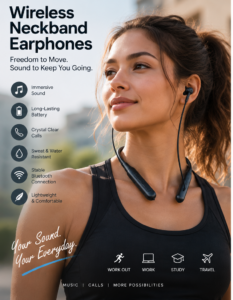
Wireless Neckband Earphones
What Are Wireless Neckband Earphones?
Wireless neckband earphones are Bluetooth audio devices featuring a flexible or semi-rigid band that sits around the back of the neck. Short cables connect the band to the earbuds, while controls and electronics are typically integrated into the neckband.
The design provides some of the benefits of traditional wired earphones without requiring a cable connected to a smartphone. At the same time, the connected earbuds are less likely to disappear if they are removed during a commute, workout or phone call.
Key Features to Consider
Battery Life and Charging
Battery life is one of the main reasons people choose a neckband design. The larger physical space available in the neckband can accommodate a battery suitable for extended listening.
However, advertised battery life should be treated as an estimate rather than a guaranteed runtime. Volume level, calls, noise cancellation and other functions can affect actual playback time. Look for manufacturers that clearly distinguish playback time from standby time and, where possible, check independent testing.
Fast charging can also be valuable. A short charging session that provides several hours of listening can be more useful in everyday situations than simply choosing the model with the largest advertised battery figure.
Bluetooth Connectivity
Bluetooth provides the wireless connection between the earphones and devices such as smartphones, tablets and laptops.
Newer Bluetooth generations can bring improvements in power efficiency and connectivity, but the version number should not be considered in isolation. Connection reliability, device compatibility and software support can have a greater effect on everyday use.
Comfort and Fit
Comfort is especially important if the earphones will be worn for several hours. A neckband should sit securely without placing excessive pressure on the neck, while the ear tips should provide a comfortable seal.
Many models include several ear-tip sizes. Trying different sizes can improve both comfort and passive noise isolation. A poor seal can also reduce bass performance and allow more external sound to enter.
Call Quality
For people who use earphones for work or frequent phone conversations, microphone quality deserves attention.
A good microphone system should capture speech clearly while reducing unwanted environmental noise. Reviews that specifically assess call performance in traffic, wind or busy indoor spaces can provide more useful information than a manufacturer’s general claim about microphone quality.
Water and Sweat Resistance
If you intend to use wireless neckband earphones for running or workouts, check for an official IP rating.
For example, IPX4 indicates protection against splashing water, making it a common choice for exercise and light rain. Higher ratings offer additional protection, but the precise rating should always be checked against the manufacturer’s specifications rather than assuming that every model is waterproof.
Advantages of Wireless Neckband Earphones
There are several practical reasons to choose a neckband design:
- Less likely to be misplaced: The connected earbuds remain attached to the neckband.
- Convenient controls: Many models provide physical buttons for calls, volume and playback.
- Good battery potential: Neckband designs can accommodate relatively large batteries.
- Secure during movement: The band can help keep the earphones together during walking or exercise.
- Useful for calls: Many models incorporate microphones into the neckband.
- Easy to remove: Earbuds can be taken out without needing to find a charging case.
These characteristics make neckbands particularly appealing to people who prioritise practicality and reliability over an ultra-minimal design.
Disadvantages to Consider
The neckband format is not ideal for everyone. Some users prefer the completely cable-free appearance and portability of true wireless earbuds.
A neckband can also feel less discreet, particularly when worn with certain clothing. Models with rigid or poorly designed bands may become uncomfortable during extended use, while lower-quality products may have inconsistent microphones, weak Bluetooth connections or exaggerated battery claims.
Wireless Neckband Earphones vs True Wireless Earbuds
The main difference is physical design.
True wireless earbuds place all electronics inside two independent earpieces and usually rely on a charging case. They are compact and highly portable but can be easier to lose.
Wireless neckband earphones connect the two earbuds through a band worn around the neck. They sacrifice some compactness in exchange for easier handling, secure retention and potentially longer listening between charges.
Neither design is universally suitable. The better option depends on whether portability, stability, battery life, comfort or call use matters most.
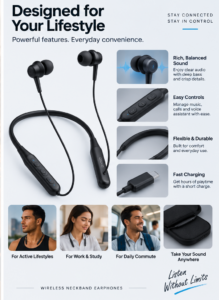
Wireless Neckband Earphones
What to Check Before Buying
Before purchasing wireless neckband earphones, consider:
- Real-world battery life rather than the headline figure.
- Bluetooth compatibility with your smartphone and other devices.
- Ear-tip sizes and overall neckband comfort.
- Microphone performance if you make frequent calls.
- IP rating if the earphones will be exposed to sweat or rain.
- Physical controls for convenient playback and call management.
- Fast charging if you regularly forget to charge devices.
- Warranty and replacement ear tips for longer-term ownership.
- ANC or noise isolation if you regularly listen in busy environments.
Frequently Asked Questions
Are wireless neckband earphones worth buying?
They can be a practical choice for people who want wireless audio, convenient controls, secure handling and good battery potential without using completely independent earbuds.
Are neckband earphones good for running?
Some are suitable for running, particularly models with a secure fit and an appropriate IP rating. Check the manufacturer’s water-resistance specification before using them during heavy exercise or in wet conditions.
Do neckband earphones have better battery life than earbuds?
They can. The neckband format provides more physical space for battery components, although actual battery life varies considerably between models and usage conditions.
Can wireless neckband earphones make phone calls?
Yes. Most Bluetooth neckband designs intended for everyday use include a built-in microphone and call controls, although call quality varies between models.
Conclusion
Wireless neckband earphones remain a practical alternative to true wireless earbuds for users who value secure handling, convenient controls, extended listening and reliable everyday use. They can be particularly useful for commuting, exercise, studying, working and frequent phone calls.
When choosing a pair, focus on comfort, genuine battery performance, microphone quality, Bluetooth reliability and the appropriate IP rating rather than simply choosing the model with the longest advertised specifications. Compare the features with your daily listening habits, and choose a neckband that provides the right balance of sound, comfort and convenience.